
What Tabletop RPGs Can Teach You About Writing Better Red Team and Pentest Reports
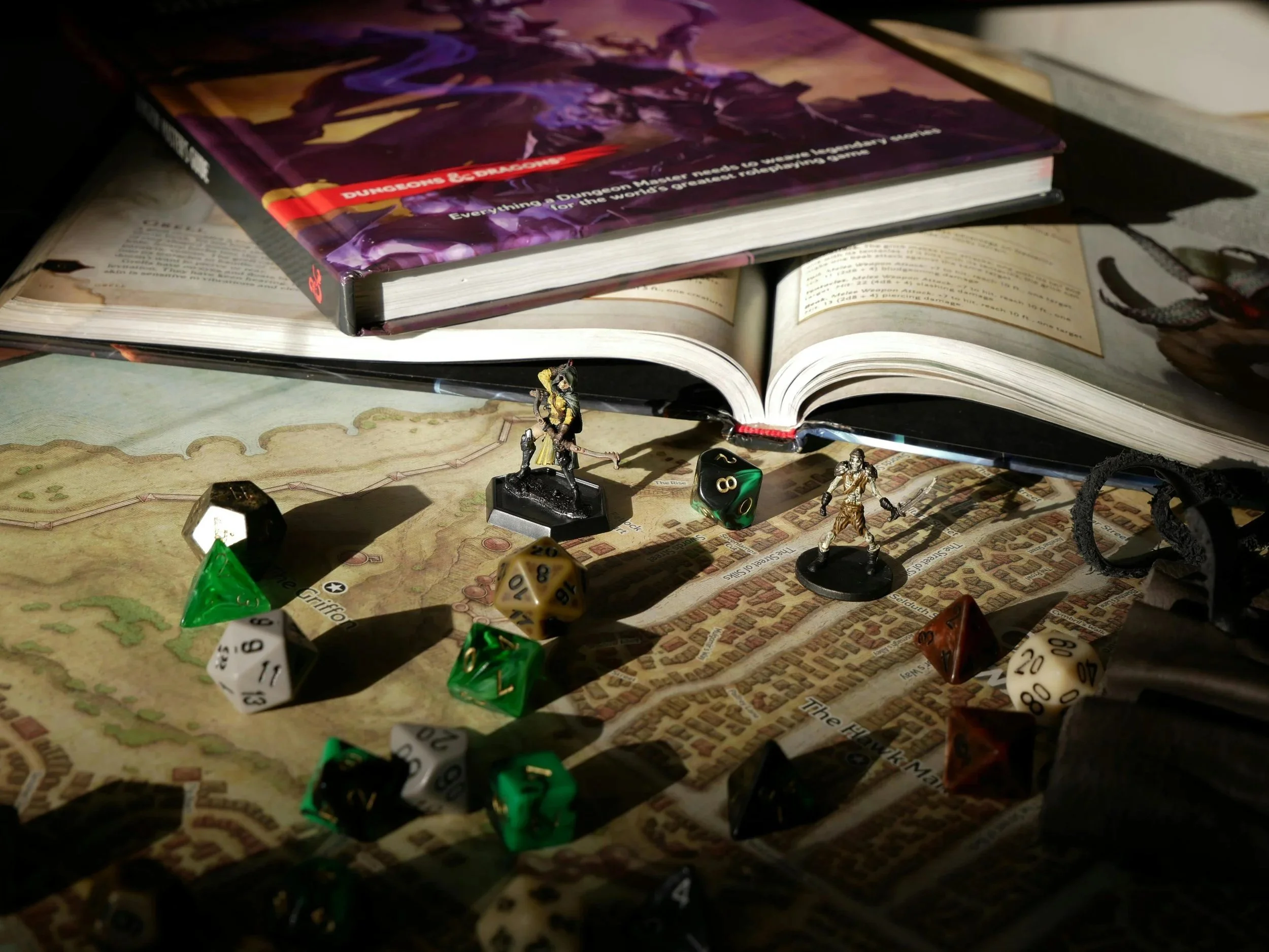
Figurines and Dice on Board Game Map by Stephen Hardy via Pexels
There is a funny connection between tabletop roleplaying games and offensive security that a lot of people do not notice at first.
On one side, you have red teamers and pentesters trying to understand systems, anticipate human behavior, adapt to surprises, and explain risk in a way that actually matters to the people reading it.
On the other, you have games like Dungeons & Dragons, Call of Cthulhu, Delta Green, and other tabletop RPGs where players build characters, navigate uncertainty, react to the unexpected, and shape a story together in real time.
At a glance, they seem like very different worlds. One is technical and professional. The other is imaginative and social. But the overlap is real, and honestly, it is one of the most useful overlaps I have seen for people who want to improve how they communicate their work.
A good red team or pentest report is not just a list of findings. It is a story about exposure, trust, consequence, and opportunity. It explains what happened, why it mattered, how the pieces connected, and what the client should do next. The best reports do not just dump evidence on the page. They guide the reader through an experience. They help people see the environment through the eyes of an attacker without making them feel buried in jargon or overwhelmed by detail.
That is where tabletop RPGs can help in a big way.
Reporting is storytelling, whether we admit it or not
A lot of technical professionals are taught to think of reporting as documentation first. That is true, but it is incomplete. A report absolutely needs to be accurate, structured, and defensible. It also needs to be readable. It needs to create understanding. It needs to hold attention long enough for the reader to care.
That is storytelling.
When you run or play in a tabletop RPG, you are constantly practicing the same core skill. You are taking information and turning it into something people can follow. You are deciding what details matter. You are choosing what to reveal early, what to save for later, and how to create a sense of progression. You learn that facts by themselves are rarely enough. The way they are connected is what gives them power.
That lesson matters in reporting.
A weak report says, “The application had broken access control, exposed credentials, and an SSRF issue.”
A stronger report says, “During testing, we identified multiple weaknesses that could be chained by an attacker to move from initial access into broader compromise. These issues increased the likelihood of unauthorized access to sensitive customer data, weakened tenant boundaries, and reduced confidence in the platform’s ability to contain abuse.”
The underlying facts may be the same, but the second version gives the reader a path to follow. It helps them understand the bigger picture.
Tabletop games train you to think that way naturally. They teach you that a moment becomes memorable when it has context. A report becomes useful the same way.
Good game masters think like good report writers
Anyone who has run a tabletop game knows that the job is not just making things up. It is observing players, reading the room, adjusting tone, clarifying stakes, and helping people understand what their choices mean.
That sounds a lot like reporting.
When you write a report, you are doing more than preserving technical evidence. You are translating reality for different audiences. Executives need business impact. Technical teams need reproduction detail. Security leadership needs patterns and priorities. Compliance stakeholders need to understand control failure and risk. If you write the same way for all of them, someone is going to miss what matters.
Game masters get used to this kind of translation. They learn that different players engage with the same scene differently. One cares about the emotional tension. Another cares about the mechanics. Another wants the tactical angle. Another wants the lore.
That is very close to how readers engage with reports.
Playing tabletop RPGs helps build a habit of asking, “Who is this for, and what do they need from this moment?” That single question can dramatically improve your writing.
It can help you stop writing for yourself and start writing for the people who have to act on what you found.
RPGs help you see systems as living environments
One of the biggest differences between average reporting and strong reporting is perspective.
Average reporting often treats findings as isolated defects. Strong reporting treats them as part of an environment. It looks at how design choices, user behavior, business pressure, trust assumptions, and architectural weaknesses all combine into real-world exposure.
Tabletop RPGs are excellent at teaching this kind of thinking.
In a good campaign, nothing exists in a vacuum. A door is never just a door. It might be a chokepoint, a symbol of class, a clue about who lives there, a route for escape, or a trap for the careless. A village is not just a map location. It has fears, tensions, motives, habits, blind spots, and relationships.
That kind of layered thinking maps surprisingly well to offensive security work.
An admin portal is not just a web page. It is a trust boundary.
A shared credential is not just a mistake. It is an operational shortcut born from convenience.
A missing tenant separation control is not just a bug. It is evidence of a design assumption that may have far wider impact.
Tabletop games reward people for asking better questions about the world in front of them. Why is this here? Who benefits from it working this way? What happens if someone breaks the expected flow? What is the system assuming that nobody has challenged yet?
Those are red team questions. They are also reporting questions.
The more you practice seeing environments as living systems instead of static checklists, the better your reports become.
They build empathy, and empathy improves reports
This is one of the most underrated parts of both tabletop gaming and security communication.
When you play an RPG, you spend time inhabiting points of view that are not your own. You may play the cautious investigator, the overconfident noble, the desperate survivor, the outsider, the opportunist, or the person trying their best inside a broken system. Even if it is fictional, you are practicing perspective-taking.
That matters because great reports require empathy.
Not sympathy. Not softness. Empathy.
You need to understand how a developer might have ended up here. You need to understand why an operations team chose speed over control. You need to understand why leadership may not immediately grasp the urgency of a technical issue. You need to understand how different people will interpret your tone, your phrasing, and your recommendations.
Without empathy, reports often turn cold, overly harsh, or strangely detached. They may be technically correct, but they fail to invite action. Readers feel judged instead of helped. Defensive walls go up. Valuable findings get ignored because the message lands badly.
Tabletop RPGs help counter that. They remind you that people act from motives, limitations, habits, incentives, and imperfect information. Once you internalize that, your reporting starts to sound more constructive and more human.
You begin writing recommendations that feel usable.
You begin explaining impact in a way that connects.
You begin describing weaknesses without sounding like you are scoring points.
That is a real professional advantage.
On the fly thinking is a muscle, and RPGs give it constant exercise
A lot of people want to get better at thinking quickly in client conversations, readouts, scoping calls, and report reviews. They want to be less rigid. Less rehearsed. More adaptive.
Tabletop RPGs are fantastic for this.
No plan survives contact with players. Anyone who has run a game knows this in their bones. The party ignores the obvious lead. They become suspicious of the wrong person. They decide to negotiate with the monster. They burn down the tavern. They get emotionally attached to a side character you invented two minutes ago. They turn a simple encounter into a moral crisis.
And you have to respond.
You learn to take incomplete information, identify the important signal, and create a coherent next step without panicking. You learn to improvise while preserving structure. You learn to hold the larger narrative in your head while reacting to immediate change.
That is deeply relevant to red teaming and pentesting.
It shows up when a client asks an unexpected question during a debrief.
It shows up when you need to explain attack flow without your notes in front of you.
It shows up when you are connecting several moderate findings into a larger risk story in real time.
It shows up when a stakeholder challenges impact and you need to reframe the issue in a way they understand.
People sometimes assume on the fly thinking is a personality trait. It is not. It is practice. Tabletop games simply make that practice enjoyable.
The more you do it, the less you freeze when conversations go off script.
RPGs teach pacing, which reports desperately need
One of the easiest ways to lose a reader is to front-load too much detail with no shape or rhythm.
This happens in reports all the time. Readers hit a wall of dense text, repetitive finding language, or evidence with no narrative bridge. Their attention drops. Important issues lose force because everything is presented at the same volume.
Game sessions teach pacing in a very practical way.
You cannot keep every moment at maximum intensity. You need setup, escalation, tension, release, and payoff. You need small reveals before big reveals. You need breathing room between heavy beats. You need momentum.
Good reports benefit from the same principle.
An executive summary should not read like raw notes.
An attack narrative should not feel like a disconnected event log.
Findings should not all sound equally urgent.
Recommendations should not appear as an afterthought after thirty pages of technical detail.
When you get better at pacing, your reports become easier to move through. Readers know where they are. They understand what matters most. The report feels intentional rather than assembled.
That is a storytelling lesson, but it is also a practical communication lesson.
Failure at the table makes you less afraid of imperfection in your writing
One reason many people struggle with reporting is that they treat every sentence like it has to emerge perfect. That pressure can make writing stiff. It can also make people over-rely on templates that flatten their voice.
Tabletop RPGs help with that because they are built on imperfection.
Players miss clues.
Plans fail.
People say awkward things in character.
Scenes take strange turns.
A brilliant dramatic moment is followed by total nonsense five minutes later.
And somehow, that is part of what makes the experience memorable.
Spending time in that kind of environment can help technical professionals relax just enough to write more naturally. Not sloppily. Not carelessly. Just more honestly.
You stop trying to sound like a machine that outputs findings.
You start sounding like a person who understands risk and wants to help others understand it too.
That shift matters. Readers can feel it.
A warm, confident, thoughtful report lands differently than one that sounds sterile and defensive.
Trying tabletop RPGs can make you a better communicator, not just a better writer
This is really the bigger point.
Writing better reports is not only about sentence structure or better templates. It is about becoming the kind of person who can observe carefully, think flexibly, communicate clearly, and guide others through complex situations.
Tabletop RPGs happen to train a lot of those skills at once.
They encourage listening.
They reward curiosity.
They strengthen improvisation.
They build perspective-taking.
They teach structure through play.
They make you more comfortable with uncertainty.
They help you connect facts to meaning.
And maybe most importantly, they remind you that communication is a shared experience. It is not just about what you say. It is about what the other person can follow, feel, and act on.
That is true around a game table.
It is just as true in a red team report.
You do not need to become a hardcore RPG player to benefit
This is worth saying because some people hear “tabletop RPG” and assume they need to become a lore expert, buy a shelf full of books, invent voices, or commit to a year-long campaign.
You do not.
You can benefit from this hobby with a one-shot, a simple starter set, or even a few sessions with friends who are also curious. You do not need to be good at it. You do not need to be theatrical. You do not need to know all the rules.
The value comes from participating.
Sit at the table.
Make choices with incomplete information.
Try to solve problems from a new angle.
React in the moment.
Tell part of a story with other people.
That alone is useful practice.
And if you already play, there is a good chance you have been building these skills longer than you realized.
Final thoughts
There is a tendency in technical fields to separate “serious” skills from “creative” ones, as if analysis and imagination live in different rooms. In practice, the strongest security professionals usually bring both.
They know how to test systems, but they also know how to interpret them.
They know how to identify weaknesses, but they also know how to explain why they matter.
They know how to collect evidence, but they also know how to tell the story of what that evidence means.
That is why tabletop RPGs can be such a valuable tool for red teamers and pentesters. They give you a space to practice structure, perspective, adaptability, empathy, and narrative thinking in a way that feels alive instead of forced.
So if you have ever been curious, give it a try.
Not because it will magically turn you into a better consultant overnight.
Not because every security professional needs a character sheet.
But because learning how to build stories, think from new perspectives, and respond in real time can absolutely make you better at one of the most important parts of the job.
Finding issues matters.
Helping people understand them matters just as much.